
Generosity is more than giving moneyit is a way of thinking, feeling, andacting toward others. For children learning generosity early helps shapecompassion, empathy, and a senseof responsibility to their community. When generosity is taught in fun andpractical ways, children are more likely to embrace it as a lifelong habit ratherthan a forced duty.
Why Teaching Generosity Matters
Children naturally notice fairness, kindness, and sharing. When guided intentionally, these instincts grow intovalues that influence how they treat others.
Teaching generosity helps children:
- Develop empathy and awareness of others’ needs.
- Build gratitude for what they have.
- Learn cooperation and teamwork.
- Understand that small acts can makea big difference
Generosity also reinforces the idea thathelping others brings joy not just to thereceiver, but to the giver as well.
Make Generosity Fun and Relatable
Children learn best through activities they enjoy. Turning generosity into something interactive makes the lesson stick.
Here are fun ways kids can practicegiving back:
1. Sharing Time, Not Just Things: Encourage children to help siblings with homework, play kindly with younger children, or assist parents with simple chores. Time and attention are powerful gifts.
2. Kindness Challenges Create a weekly kindness challenge such as:
• Saying something kind to three people.
• Helping a friend or neighbour.
• Writing a thank-you note or drawing for someone.
These small challenges make generosity feel exciting and achievable.
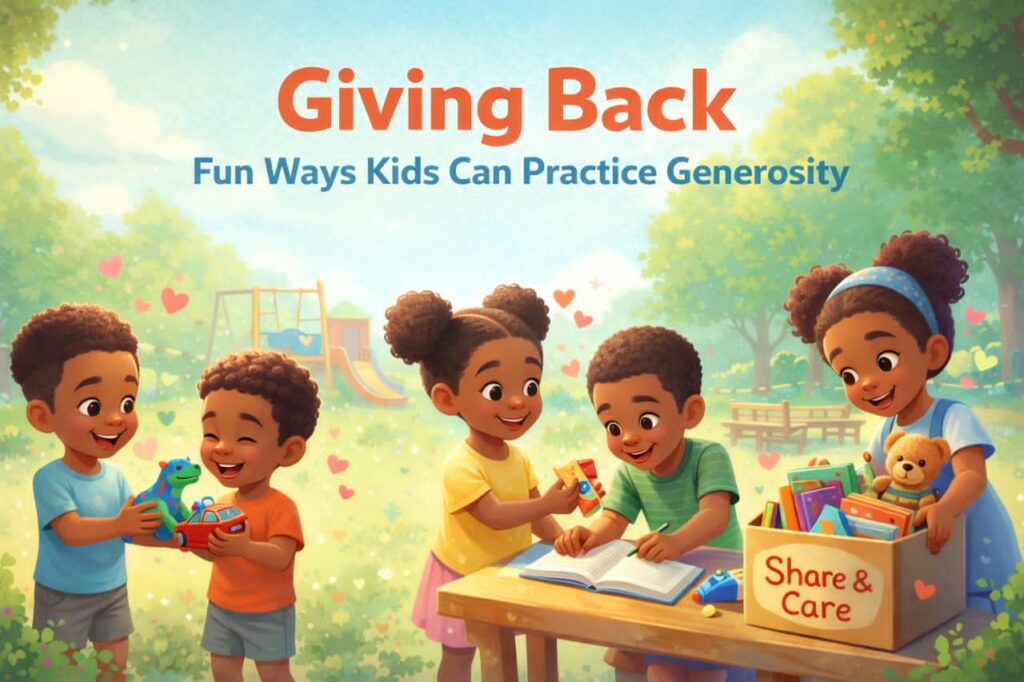
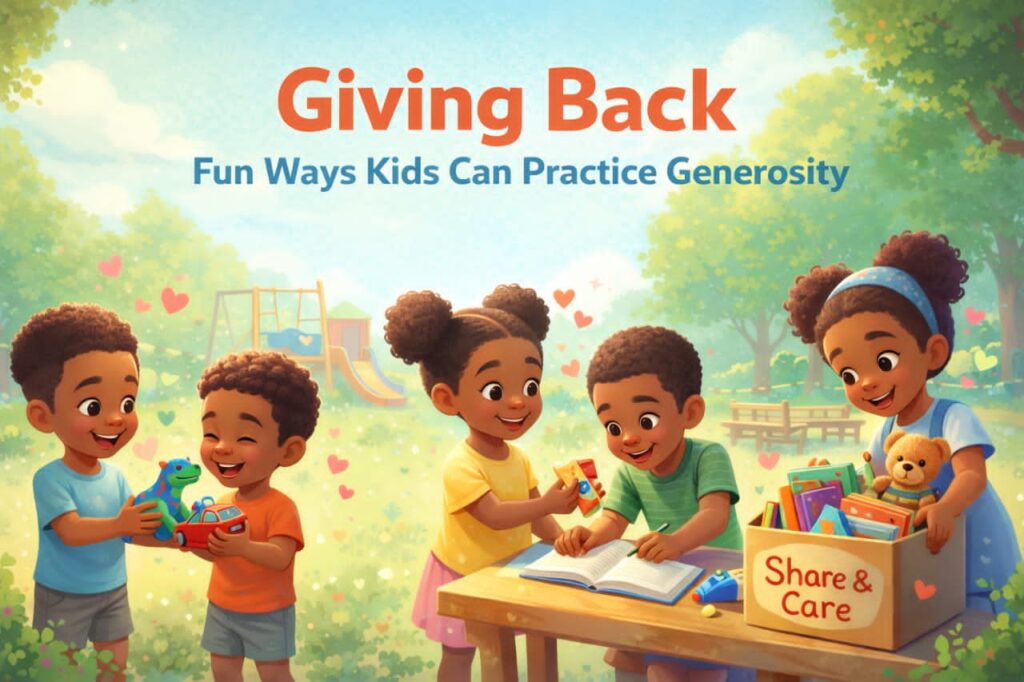
3. Giving From What They Have: Teach children to donate toys, books, or clothes they no longer use. Let them be part of the decision so they understand the meaning behind giving.
Everyday Opportunities to Give.
Generosity does not always require special events. Daily life offers many teaching moments.
Parents and guardians can:
Encourage children to share snacks or school supplies.
Involve them in helping neighbours or relatives.
Let them participate in simple family charity activities.
When children see generosity practiced regularly, it becomes a natural part oftheir behaviour.
Teaching the Heart Behind Generosity.
It is important for children to understand why they give, not just how. Parents can guide conversations by explaining that:
1. Giving should come from love, not pressure.
2. Everyone has something valuable to offer.
3. Helping others builds stronger communities.
Faith-based families may also connect generosity to spiritual values, while others may frame it around kindness responsibility, and social awareness.
When Kids Struggle With Sharing.
It is normal for children to find generosity difficult at times. Instead of forcing the behaviour, parents can respond with patience.
Helpful approaches include:
• Acknowledging the child’s feelings.
• Explaining the impact of sharing.
• Praising effort rather than perfection
Over time, encouragement works better than criticism in building generous hearts.
Conclusion.
Generosity is a skill that grows with practice. By making giving fun, practical, and meaningful, parents and guardians help children see generosity as a joyful part of life.
Whether through sharing time, offering help, or showing kindness, children learn that giving back is not about how much they have but about the love they show. These lessons lay the foundation for compassionate, responsible, andcommunity-minded adults.