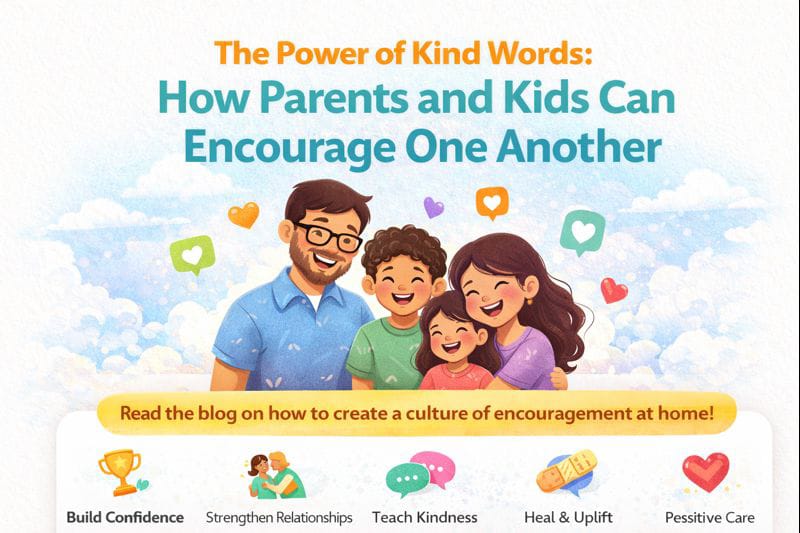

Why Words Matter at Home.
Words are powerful, especially in thehome. They can build confidence or slowlytear it down. They can create safetyor distance.
For children, the wordsspoken by parents and guardians oftenshape how they see themselves and theworld around them.
Kind words do more than soundgood. They nurture emotional safety,strengthen relationships, and create anatmosphere where love can grow.
How Kind Words Shape Children
Children are always listening. What they hear daily becomes what they believe.
When children receive encouragement, patience, and understanding, they learn that they are valued. When words are harsh or careless, those messages can linger longer than expected.
Kind words help to:
1. Build confidence and self-esteem.
2. Strengthen trust between parents and children.
3. Encourage positive behaviour.
4. Create emotional safety at home.
Words spoken with love have the power to heal and uplift. Encouragement Starts With ParentsChildren often speak the way they are spoken to. When parents model kindness even during stressful moments, children learn to do the same.
Simple ways parents can encourage with words:
1. Praise effort, not just results.
2. Offer reassurance after mistakes.
3. Correct behaviour calmly and respectfully.
4. Express love openly and consistently
These everyday moments remind children that they are seen, supported, and loved. Teaching Children to Use Kind WordsEncouragement goes both ways. Children can also learn to speak with kindness to parents, siblings, and friends.
Parents can help children by teaching them to:
1. Say “please,” “thank you,” and “I’m sorry”.
2. Compliment others sincerely.
3. Pause before speaking in anger.
4. Use words to comfort someone who is hurting.
When children understand the impact of their words, they become more thoughtful and compassionate communicators.
Creating a Culture of Encouragement at Home
A home filled with kind words doesn’t happen by accident, it’s built intentionally.
Simple practices families can adopt:
1. Share one encouraging word daily with each family member.
2. Create safe spaces for children to express feelings.
3. Celebrate strengths and small wins.
4. Replace harsh criticism with gentle guidance.
Over time, encouragement becomes a natural part of family life.
When Words Hurt: Teaching Repair and ForgivenessEven in loving homes, hurtful words can be spoken. What matters most is how families respond afterward.
Children learn important lessons when parents show them that:
1. It’s okay to admit when words hurt.
2. Apologising shows strength.
3. Forgiveness restores connection.
Modeling humility teaches children how to repair relationships with grace.
Final ThoughtKind words have the power to transform family life.
When parents and children choose encouragement over criticism and patience over anger, they create a home where everyone feels safe and valued.
One kind word at a time, families can build stronger bonds and healthier emotional lives.